Last updated: March 12, 2026
Toys, toys, toys. They multiply. They scatter. They hide under couch cushions and show up in your bed at midnight. And no matter how many times you clean up, the playroom looks like a tornado hit it by the next morning.
If that sounds familiar, you're not failing at organization - you just need systems that work for how kids actually play. When you set up the right systems, your kids can actually maintain them. Mostly. They're still kids.
Why Playroom Organization Matters
When toys have a clear home, your kids can actually find what they want to play with. They're not dumping every bin looking for one specific thing. And when everything has a labeled spot, cleanup doesn't require you standing over them directing every single toy back to its place - or bribing them with screen time.
An organized playroom also means more independent play. When kids can see what's available and access it themselves, they play longer and more creatively. Less "I'm bored" and more actually engaging with their stuff.

Step 1: Pick One Zone at a Time
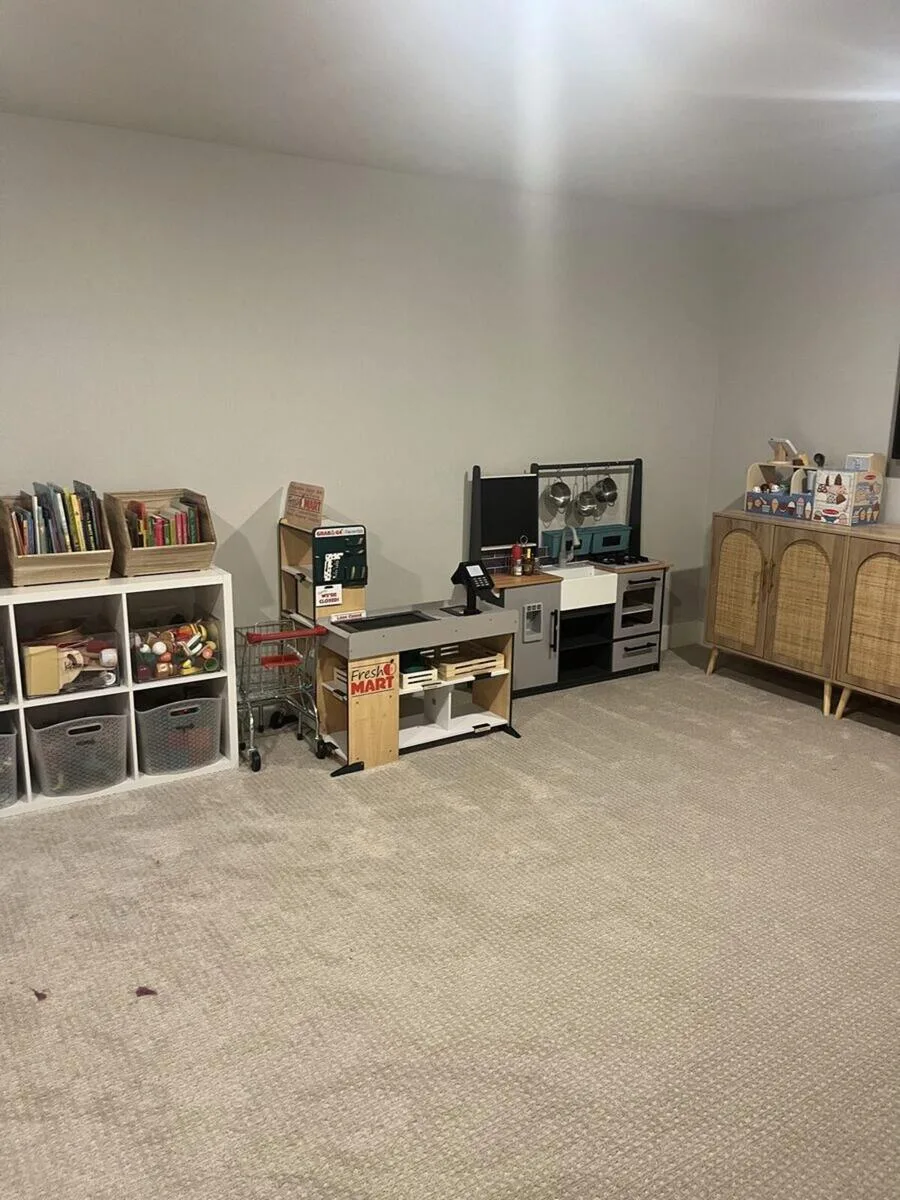
Don't try to organize the whole playroom at once. Pick ONE zone - building toys, dress-up, dolls, cars, art supplies, whatever feels most chaotic. Then gather all related items from that zone, wherever they've migrated to in your house.
- Gather all items from that zone - check under couches, in bedrooms, in the car.
- Toss broken toys. You know the ones. Missing wheels, snapped parts, dried-up markers. The kids don't even notice they're gone.
- Donate what they've outgrown. If they haven't touched it in months, it's time.
- Group what's left into bins or baskets.
- Label everything. This is the single most important step.
Tyler's take: "The label thing? Seriously. I can see 'Legos' on a bin and know exactly where they go. No thinking required. The boys can see it too, which means they can put their own stuff away. Before Heather organized our playroom, I'd just shove everything in whatever bin had space. Now everything has a spot - and honestly, bedtime cleanup is way less painful for everyone."
Step 2: Tackle Craft Supplies and Games
Markers, paper, glitter everywhere, board games with pieces scattered, puzzles missing that one piece you'll never find. Creative supplies need their own system separate from toys.
Pull everything out from your craft or game closet. Test those markers - toss the dried-up ones. Check puzzles for missing pieces. Sort into categories: all art supplies together, all games together, all puzzles together, paper and coloring books together.
What to Keep vs. Let Go
Keep craft supplies that actually work - markers and crayons that write, scissors, glue, paint if you're brave. Keep complete games and puzzles your kids actually play with. Let go of dried-up anything, incomplete puzzles, games they've outgrown, and craft kits that have been sitting untouched for a year.


The Products That Make It Work
You don't need all of these, but they're the products we use in our own home and with clients that make the biggest difference for playroom organization.
Label Maker
The single best playroom purchase. Clear labels mean everyone - kids and adults - knows exactly where things go.
Shop NowClear Storage Bins
Kids can see what's inside without dumping everything out. Less mess, more independent play.
Shop NowWhite Storage Bins
Stack nicely and look cleaner than mismatched bins. Great for open shelving.
Shop NowCube Organizer
The backbone of playroom storage. Bins slide in and out, and kids can reach everything themselves.
Shop NowClear Craft Supply Bins
Keep art supplies visible and contained - markers in one, paper in another, no more digging.
Shop NowUpright Paper Organizer
Keeps paper, coloring books, and activity pads standing upright instead of piled flat.
Shop NowPro Tips for a Playroom That Stays Organized
Use clear bins for categories kids access often. When they can see what's inside without opening or dumping, cleanup is faster and they're more likely to play with a variety of toys.
Label with pictures for younger kids. If your kids can't read yet, add a photo or drawing to the label. It makes it crystal clear where things belong and gives them independence.
Rotate toys. You don't need every toy out at once. Store some away and rotate them every few weeks. Fewer toys out means less mess, and the "new" toys they rediscover feel exciting again.
Do a quick sweep before bed. Five minutes of putting things back in their bins. It doesn't have to be perfect. The goal is that tomorrow morning, the playroom is functional enough for independent play.
Frequently Asked Questions
How do I organize a playroom with too many toys?
Start by picking one zone - building toys, dolls, cars - and gather all related items. Toss anything broken, donate what they've outgrown, and group the rest into labeled bins. Work one zone at a time to avoid overwhelm. Consider toy rotation to reduce what's out at once.
What is the best way to store craft supplies for kids?
Use clear bins so kids can see what's inside without dumping everything. Group art supplies together, games together, and puzzles together. Label with pictures for younger kids who can't read yet.
How do I get my kids to clean up their own toys?
Label every bin clearly - use pictures for younger kids. When everything has a visible, obvious home, kids can put things away without needing instructions. Cube organizers with labeled bins make cleanup a no-brainer.
Need Help Taming the Toy Chaos?
I organize playrooms for families all the time. Whether you need hands-on help or a virtual coaching session, let's create a space that works for your kids and your sanity.
Book a Free ConsultationDisclosure: Some of the links in this post are affiliate links, which means I may earn a small commission if you make a purchase through them - at no extra cost to you. I only recommend products I personally use and love.